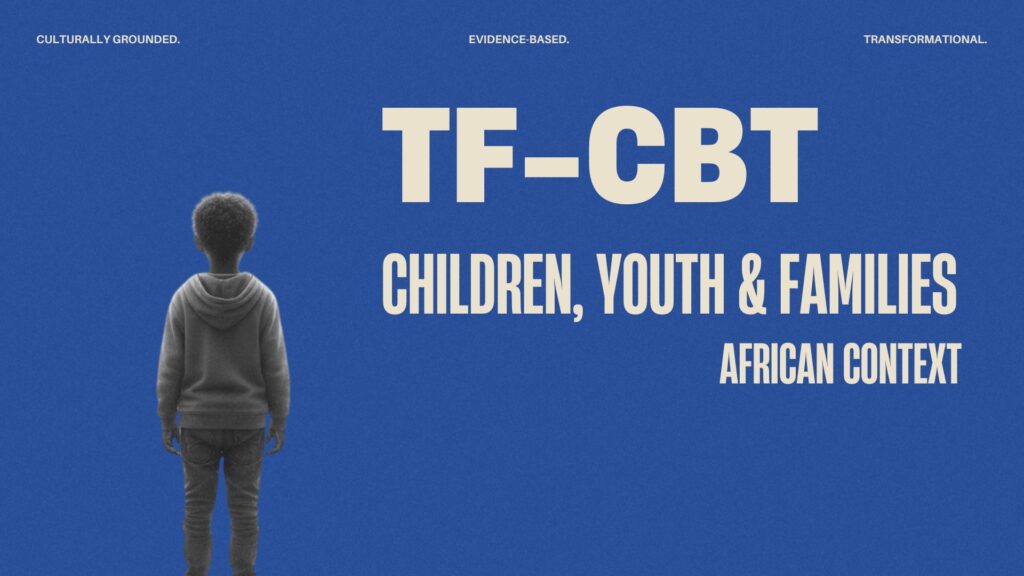
This training program equips practitioners and helpers with a culturally grounded, trauma-informed Cognitive Behavioural Therapy modality for children, adolescents, and families in the African context. Rooted in the internationally recognized TF-CBT framework and thoughtfully adapted to diverse African cultural, relational, and spiritual realities, the program emphasizes healing through safety, connection, meaning-making, and skill-building across developmental stages.
The model integrates evidence-based trauma treatment with deep contextual sensitivity—honouring family systems, community values, faith perspectives, and the lived experiences of African children and caregivers. Participants learn not only what to do in trauma care, but how to do it in ways that are ethical, responsive, and culturally meaningful.
Program Structure:
The TF-CBT certification program is designed to ensure both strong theoretical grounding and practical clinical competence through three progressive phases:
Phase One: Independent Study (Online)
Participants engage in foundational learning through core readings, recorded lectures, and guided online discussions. This phase emphasizes reflective learning, case-based dialogue, and knowledge integration, allowing participants to build a shared conceptual language around trauma, development, and healing at their own pace.
Phase Two: In-Person Intensive Training
This experiential phase brings participants together for hands-on learning. The TF-CBT model is taught session-by-session, with emphasis on demonstrations, role-plays, group processing, cultural adaptations, and clinical decision-making. Participants translate theory into practice within a supportive learning community.
Phase Three: Supervised Practicum
Participants apply the model with children, adolescents, and families in real-world settings while receiving structured supervision and feedback from the training team. This phase supports skill integration, reflective practice, and professional growth across different age groups and care contexts.
Who This Training Is For
This program is designed for counsellors, social workers, psychologists, pastors, educators, community facilitators, and psychosocial helpers who are working with, or preparing to work with, trauma-exposed children and families.
Participants are invited to choose this training not simply to acquire a technique, but to develop a trauma-informed posture that integrates skill, presence, ethics, and cultural responsiveness. Certification reflects demonstrated engagement across all three phases, including learning participation, applied practice, and supervised implementation.
Graduates are equipped not only to deliver TF-CBT with competence and care but also to strengthen trauma-informed practice within African communities.