What Makes Counselling Christian?
What Makes Counselling Christian?
Faith, wisdom and care for the whole person
By Elias Omer
When someone comes for counselling, they bring more than a problem. They bring a body that may be tired, relationships that may be painful, questions about their worth, and beliefs about God. They may also bring a quiet fear: “If I speak honestly, will I be understood—or judged?”
Christian counselling should make room for that honesty. Its Christian identity should be seen in how the counsellor listens, understands suffering, uses knowledge and treats the person seeking help.
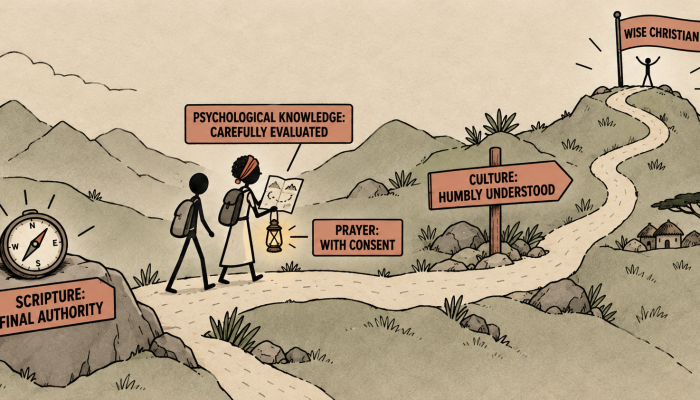
Siang-Yang Tan offers a helpful foundation for this work. He describes an approach centred on Christ, grounded in Scripture and dependent on the Holy Spirit. He also gives serious attention to counselling skills, psychological knowledge, culture and ethical responsibility (Tan, 2011, pp. 325–337).
Drawing especially on Tan’s work, this article explores how these commitments can shape compassionate, responsible care. It is written from an evangelical Christian perspective, while recognising that Christians differ in how they understand the relationship between faith and psychology.
Christian care begins with the person
Imagine a grieving woman speaking with two helpers. One quotes several Bible verses but interrupts her tears. The other listens patiently, acknowledges her loss and asks what support she needs.
The first conversation contains more religious language. Yet the second may express Christian love more clearly.
Scripture and prayer have an important place in Christian counselling. But their presence alone does not make care wise or faithful. The counsellor’s character, the purpose of the conversation and the way the person is treated also matter.
Tan emphasises the counsellor’s warmth, understanding, sincerity and spiritual maturity. He also recognises the importance of the relationship between counsellor and client (2011, p. 335). People need space to speak about experiences they find confusing or shameful. A harsh or hurried response can close that space.
For Christian helpers, the image of God provides a starting point. Genesis 1:26–27 presents human beings as created in God’s image. Their value is not earned through success, education, income or emotional strength. Depression, addiction, disability and failure do not remove that value.
This conviction changes ordinary choices. We listen without treating people as problems to solve. We ask before making assumptions. We notice strengths alongside struggles. We remember that the person receiving care has a voice.
Seeing the whole person
Tan’s account of human nature includes physical, emotional, social and spiritual dimensions (2011, pp. 329–333). These dimensions belong together.
Consider someone who has lost a job. Financial pressure may disturb sleep. Poor sleep may make everyday tasks harder. Shame may lead to withdrawal from friends. Prayer may become difficult. The person may begin to believe that unemployment means personal failure or rejection by God.
A narrow response attends to only one part of this experience. Whole-person care asks how the different parts connect.
The biblical story of Elijah offers a useful picture. In 1 Kings 19, Elijah’s fear and exhaustion are met with food, rest, God’s presence and renewed direction. This passage is not a treatment plan for every emotional difficulty. It does remind us that bodily needs matter within spiritual life.
In practical terms, a counsellor asks about health, sleep, relationships, responsibilities, losses, resources and faith. The purpose is not to explain everything at once. It is to understand enough to respond wisely.
Suffering does not automatically reveal personal sin
Christian faith takes sin seriously. Harmful choices can damage people and relationships. Responsible counselling must make room for honesty, repentance and changed behaviour.
But it is a mistake to assume that all emotional pain is caused by the sufferer’s sin. Tan explicitly rejects that conclusion. He points to Jesus’ anguish in Gethsemane as an example of profound distress without personal wrongdoing (2011, pp. 330–331).
A survivor of violence should not be blamed for another person’s actions. A grieving parent does not need a quick explanation of what they did wrong. Someone who feels anxious needs careful understanding before moral conclusions are drawn.
Compassion and responsibility can remain together. We can acknowledge what happened to a person while helping them consider the choices available now.
Bringing faith and psychology into conversation
“Integration” can sound like a difficult academic term. Here, it means bringing Christian beliefs and psychological knowledge into careful conversation.
Tan reviews several approaches to this relationship. Some reject psychology, some keep theology and psychology separate, and others bring them together in different ways. His own approach gives Scripture final authority while receiving psychological insights that are consistent with a Christian understanding of life. He also values the development of psychology from Christian theological and historical sources (2011, pp. 326–327).
This requires judgment. A useful observation about human behaviour does not make every assumption within a theory true. Equally, an idea does not become false simply because its author is not a Christian.
Tan describes Scripture as comprehensive but not exhaustive in relation to counselling (2011, p. 334). In accessible terms, the Bible gives a broad and foundational account of God, humanity, suffering, responsibility and hope. It does not supply every detail of medical assessment or every counselling method.
A Christian counsellor can therefore ask:
· What does this approach assume about human beings?
· What evidence supports its use for this concern?
· Does it respect the person’s dignity and choices?
· Is it consistent with Christian convictions?
· Do I have the training to use it responsibly?
These questions apply to ministry practices as well as psychological methods. Familiar church language can also be misunderstood or used carelessly.
Prayer, practical support and professional treatment can belong within the same plan of care. Tan warns against using religious interventions alone when a person needs other psychological or medical treatment (2011, p. 380).
Integration begins in the counsellor’s own life
Tan identifies personal integration as foundational, alongside integration in ideas and professional practice (2011, p. 327).
This raises a question for every helper: How are my own beliefs and experiences shaping the way I respond?
A counsellor who believes that faithful Christians should never feel afraid may struggle to listen patiently to anxiety. A helper who feels responsible for solving every problem may offer advice too quickly. Someone uncomfortable with grief may move to prayer before the person has finished speaking.
Personal growth helps us recognise these habits. Prayer, reflection, supervision and honest relationships can reveal where our own needs are entering the conversation.
Tan’s discussion of the Holy Spirit includes power, truth and the fruit of the Spirit. He stresses their relationship and warns of the danger of power without love (2011, pp. 364–365). In counselling, patience and gentleness are practical expressions of that love.
A helpful question is: “Am I making room for this person’s experience, or am I trying to reduce my own discomfort?”
Faith can shape care in different ways
One of Tan’s most useful distinctions is between implicit and explicit integration (2011, pp. 339–343).
Implicit integration means that Christian convictions shape the counsellor’s approach without directly introducing religious discussion or practices. Faith may guide the counsellor’s respect, honesty, patience and private prayer.
Explicit integration means that spiritual matters are addressed directly. The counsellor and client may discuss beliefs about God, read Scripture, pray together or explore support from a faith community.
Tan treats these as points along a continuum. Neither should be chosen simply to prove that the counsellor is Christian. The person’s needs, preferences and consent matter, as do the counsellor’s skills.
A Christian client may welcome prayer in one session and prefer to talk without it in another. A person from another faith may value a Christian counsellor’s care while not wanting Christian practices included. Respecting these choices is part of responsible care.
Kenneth Pargament’s work also highlights the need to understand spirituality within a person’s difficulties and resources (2007). Faith may offer comfort and belonging. Spiritual struggles may also be part of what the person needs help to explore.
We can begin with simple questions: “What place does faith have in your life?” “Has it been a source of support, difficulty, or both?” “Would you like us to include it in our conversations?”
Using Scripture with understanding
Scripture can offer language for grief, challenge destructive beliefs, guide responsible action and nurture hope. Tan discusses several ways to include it, while warning that thoughtless use can cause harm (2011, pp. 352–355).
Fernando Garzon similarly describes ways Scripture can contribute to psychotherapy, emphasising ethical care and an understanding of the client’s religious and cultural background (2005).
A familiar verse may carry different meanings for different people. For one person, it brings comfort. For another, it recalls a painful experience with religious authority. Understanding that history helps the counsellor avoid assumptions.
A practical check, adapted from the teaching material behind this article, is to consider five things:
· Person: What does Scripture mean to this individual?
· Permission: Do they want to explore it now?
· Passage: Am I understanding the biblical text in context?
· Purpose: Why might this passage help at this point?
· Possible harm: Could my use of it increase shame, confusion or pressure?
For example, telling a bereaved person to rejoice may make them feel that tears reveal weak faith. Yet Scripture also gives us lament—the honest expression of sorrow before God. Psalm 13 brings difficult questions into prayer. John 11:35 shows Jesus weeping.
A more thoughtful invitation might be: “The Bible makes room for deep sadness. Would you like to explore a psalm together, or would you prefer that I listen today?”
The choice must be real. Declining a spiritual exercise should not reduce the care a person receives.
Prayer that supports rather than pressures
Tan describes prayer as part of relationship with God, not simply a technique for reducing distress (2011, p. 344). This matters because counselling can unintentionally turn prayer into a performance or a test of faith.
Prayer may express grief, gratitude, uncertainty, confession or hope. It can ask for wisdom and strength without promising a particular outcome.
Before praying aloud with a client, the counsellor can ask: “Would prayer be helpful today? Is there something you would like us to pray about?”
Consent remains important even when the person has chosen Christian counselling. Tan repeatedly connects spiritual interventions with informed consent and clinical sensitivity (2011, pp. 334, 340–343).
Dependence on the Holy Spirit also calls for humility. A counsellor should not present a personal impression as an unquestionable command from God. Spiritual language must never remove the client’s freedom to think, ask questions or disagree.
Prayer can accompany action. It should not be used to avoid listening, assessing a concern, addressing harm or arranging further support.
What this can look like in practice
Consider this fictional example, adapted from the teaching script.
Dawit is a church youth leader who lost his job several months ago. He sleeps poorly, worries about money and feels ashamed because others depend on him. His family tells him to pray more. He asks the counsellor, “Please just tell me what the Bible says.”
A helpful response begins with curiosity: “Your faith clearly matters to you. What are you hoping the Bible will help you understand?”
The counsellor can also explain: “We can include Scripture and prayer. I would like to understand how this has affected your sleep, daily life and relationships, so that we can consider what support would help.”
This conversation might explore Dawit’s belief that losing work has made him worthless. With his agreement, biblical reflection could address dignity and identity. Practical discussion could consider daily routines, employment support and people he trusts. Assessment would help identify whether medical or specialist care is needed.
His family and church might become valuable sources of help. But the counsellor would first ask what involvement Dawit wants and discuss what information, if any, could be shared.
The aim is a shared plan that takes his faith, distress, circumstances and choices seriously. No diagnosis or guaranteed outcome can be drawn from this brief example.
Culture, boundaries and shared responsibility
Counselling takes place within a community and a culture. Language, family expectations, finances, church relationships and experiences of authority all shape what seeking help means.
Tan includes cultural sensitivity and referral skills among his principles of effective Christian counselling (2011, pp. 336–337). A family network may offer care and practical support. It may also make privacy difficult. A church may provide belonging, while a particular relationship within it may feel unsafe. The counsellor needs to ask rather than assume.
Boundaries are especially important when one person has several roles—for example, pastor, teacher and counsellor. The client needs clarity about the purpose of the relationship, privacy and its limits, and the choices available. Tan discusses the risks of blurred roles, imposed beliefs and work beyond a counsellor’s competence (2011, pp. 379–383).
Knowing when to refer is an expression of responsible care. Faith does not make one helper competent to address every need. Collaboration can bring together counselling, medical care, practical assistance and spiritual support while respecting the person receiving help.
Hope that allows honesty
Christian hope makes room for tears, unanswered questions and gradual change. It does not require a person to look well before they are ready to speak truthfully.
Tan connects Christian counselling with growth in Christ as well as relief from distress (2011, pp. 331, 367). Spiritual growth should be an agreed goal when the client wants it; it should not become a reason to neglect their immediate suffering or the goals that brought them to counselling.
Sometimes progress means asking for help, recognising a harmful belief, rebuilding a daily routine or speaking honestly about grief. Sometimes it means receiving care that the person previously felt ashamed to need.
Christian counselling offers a relationship in which truth and love can work together. The counsellor brings faith, skill and humility. The person seeking help brings their story, questions and choices. Within that meeting, there can be room for both honest suffering and renewed hope.
References and further reading
Tan, S.-Y. (2011). Counseling and psychotherapy: A Christian perspective. Baker Academic.
Primary source for this article. Chapter and page references use the 2011 edition supplied with the teaching material; page numbers differ in later editions.
Relevant chapters:
· Chapter 14, “Christian Theology in Christian Counseling: A Biblical Perspective on Human Nature and Effective Counseling and Psychotherapy,” pp. 325–338.
· Chapter 15, “Christian Faith in Clinical Practice: Implicit and Explicit Integration,” pp. 339–362.
· Chapter 16, “The Holy Spirit and Christian Spirituality in Counseling and Psychotherapy,” pp. 363–373.
· Chapter 17, “Legal and Ethical Issues in Christian Counseling and Psychotherapy.” This article draws on pp. 379–383 within the supplied excerpt.
Garzon, F. (2005). Interventions that apply Scripture in psychotherapy. Journal of Psychology and Theology, 33(2), 113–121. https://doi.org/10.1177/009164710503300204
Author’s university record: https://digitalcommons.liberty.edu/ccfs_fac_pubs/46/
Pargament, K. I. (2007). Spiritually integrated psychotherapy: Understanding and addressing the sacred. Guilford Press.
Publisher’s book page: https://www.guilford.com/books/Spiritually-Integrated-Psychotherapy/Kenneth-Pargament/9781609189938
Biblical passages discussed: Genesis 1:26–27; 1 Kings 19; Psalm 13; John 11:35. Biblical material is paraphrased; no particular English translation is quoted.
Adapted from Elias Omer’s Counselling 2, Module 2 teaching material on Christian counselling and integration. Examples and practical applications are illustrative. This article is an educational introduction, not a substitute for professional counselling training.